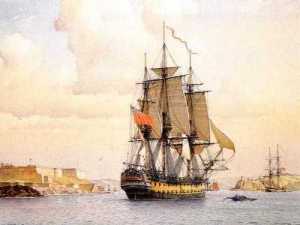
(The HMS Bellerophon – a ship captained by Charles Austen)
One of our region’s members, Sheila Johnson Kindred, has researched extensively on the presence of Charles and Francis Austen in Halifax. In a paper she authored titled, “Two Naval Brothers, One City: Charles and Francis Austen in Halifax, Canada”, and presented at the Jane Austen Society Conference held in Halifax, 2005, she provides a fascinating insight into the Austens’ presence here, which she introduces with, “it is a story about their experiences, their personalities and the nature of naval service during the turbulent times of the Napoleonic Wars and the peace that followed”.1
The following story is based on excerpts from her paper.
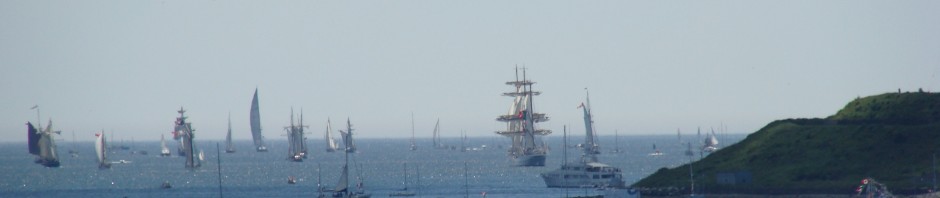
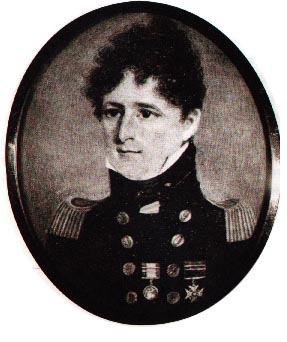 Charles Austen first came to Halifax aboard his Sloop, Indian, on August 6, 1805, on her maiden voyage from Bermuda. The Royal Naval Yard was of great importance for the Squadron’s safety, in refitting and making much-needed repairs. “The Squadron depended on the services and skills which were uniquely available in Halifax”.2
Halifax was also the site of a Naval Vice-Admiralty Court and he – along with other officers – received prize money from captured ships, most notably, the Spanish schooner, Rosalie.
Although Halifax was a typical, rough port, Charles “mixed with the Halifax of the professional, government, administrative and wealthy merchant classes. These were the people who liked to live well and were anxious to show themselves off to advantage. Into this prosperous milieu, naval officers were in constant demand, frequently invited and warmly welcomed”. Jane Austen’s letters give the impression that Charles was very personable and naturally convivial. “A Ball, she once observed to Cassandra, would be a likely spot to find Charles”.3
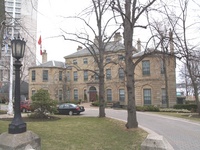
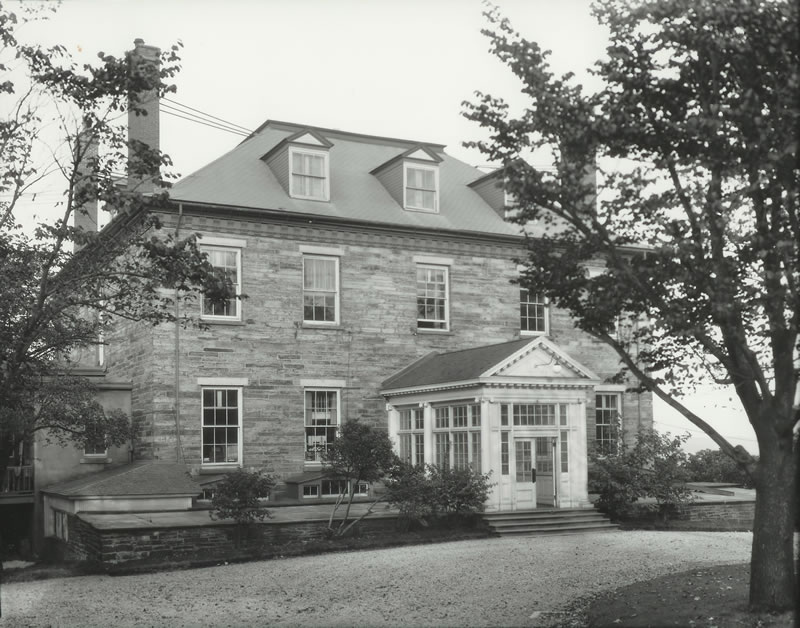
In 1807, Charles would marry the pretty, blonde Fanny Fitzwilliam Palmer, the young daughter of Bermuda’s Attorney General, John Grove Palmer, and they would make an extremely attractive couple at the naval and Halifax social functions at Government House, the residence of the 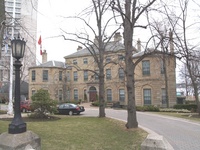 British Monarch’s representative in Nova Scotia, Governor Sir John Wentworth. As well, parties were attended at The Rockingham Club, “where all the great people dined”.4
It is of interest to note, that Charles Austen came to Halifax, the same year as the Governor and his wife moved into the newly-built Government House.
During Charles’ last year on the station, he arrived in Halifax on May 27, 1810, promoted as Flag Captain on Swiftsure, with his young wife Fanny, their 1 &1/2 year-old daughter Cassandra and Vice-Admiral Sir John Borlase Warren, his Commander-in-Chief of the Station.5
Charles and Fanny had their daughter Cassandra baptized at St. Paul’s Church, Barrington Street, on October 6, 1809, who would be his sister Cassandra Austen’s god child.
“There does remain a visual souvenir of the Austens’ visits to Halifax. While in port, Charles arranged for Halifax-based painter, Robert Field, to paint a small head and shoulders portrait of himself. It depicts a handsome young captain, whose expression is both engaging and sympathetic.”6
“In sum, what did Halifax mean to Charles? It was a safe harbour and a base which provided the means to maintain his beloved Indian and his later vessels Swiftsure and Cleopatra; it was the location of the Vice-Admiralty Court, whose judgements about naval prizes brought him some welcome financial gain. Finally, Halifax was a place to savour his new status as Flag Captain and Post Captain, somewhere to relax, to socialize and a place where on several occasions he shared both his professional and personal life with his adored wife, Fanny and their little daughter”.7
An interesting footnote to this story, is that Charles’ son, Charles John, would marry a Nova Scotian girl, Sophie Deblois; so, all of the living descendents of Jane Austen’s brother Charles, come from this union. “In consequence, they are part Nova Scotian themselves”. 8 In her paper’s Conclusion, Ms. Kindred notes: “In the course of reconstructing Charles’ life experiences, she [Jane Austen] would have incidentally acquired the kind of insights about naval life which stood her in good stead when she later created such memorable naval characters as Frederick Wentworth, his brother officers, and Admiral Croft in Persuasion, and William Price in Mansfield Park“. 9
“At the time, when Jane Austen was communicating with Charles on the North American Station, she may not have suspected that information about her brother’s time in Halifax would ever influence her artistically, but it is a pleasure to think that their correspondence quite likely did”.10
Sir Francis William Austen: Vice-Admiral of the White: Commander-in-Chief of the North American and West Indies Station
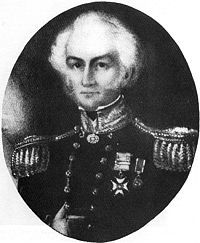
Sir Francis’ tenure in North America, was during peace and relative prosperity and at the age of 71, was his last active sea service.11 His Squadron’s headquarters were in Halifax, and they were deployed to, “ensure the protection of the fisheries against American interests, to make coastal surveys and to maintain a British presence in colonial waters”.12
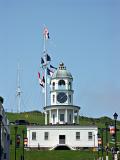
Vice-Admiral Austen first arrived in Halifax on HMS Vindictive, on June 19, 1845, where according to the local press, “he disembarked under a salute from The Citadel and was received with a guard of honour on landing” (Morning Chronicle, June 19, 1845). 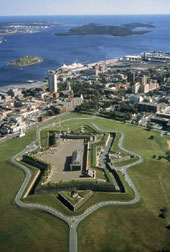 Once on site, he set about his administrative tasks with rigour and precision.13 He authored an extremely comprehensive manual of what was expected of the ships, their officers, navigation, discipline and general behaviour, entitled “General Instructions and Port Orders for the Squadron Employed on the North America and West India Station“. 14
Sir Francis was particularly innovative regarding the health of his men, by using part of the old naval hospital and the services of Vindictive’s surgeon and medical supplies, he devised a system much more conducive to patients’ recovery. Another commitment he made to healthy practices was his directive forbidding the dumping of waste. Speaking as an early environmentalist, he required that, “whenever any Ship may have occasion to go alongside the Wharf at Halifax Yard, care is to be taken to prevent any rubbish or dirt from being thrown overboard”.15
Due to his age and naturally serious temperament, Ms. Kindred wryly comments that, “it is understandable why he did not seek the company of local society or desire to host formal balls and dinners at his official residences in Halifax and Bermuda, beyond what was necessary”.16
 Although Francis’ residence in Halifax, would be 28 years after Jane’s death in 1817, she had taken an active interest in the progression of both of her brothers’ naval careers, through letters, newspapers, The Naval Chronicle and Steel’s Naval Lists – the very source consulted by Anne Elliott in Persuasion.17 No doubt, information from Francis about his naval exploits also influenced her writing.
“Two Naval Brothers, One City: Charles and Francis Austen in Halifax, Canada” – Sheila Johnson Kindred, Jane Austen and the North Atlantic – Essays from the 2005 Jane Austen Society Conference in Halifax, Nova Scotia, Canada
1 -Pg.9; 2 -Pg.10; 3 -Pg.12; 4 -Pg.13; 5 -ibid.; 6 -Pg.14; 7 -Pg.15; 8 -Pg.17; 9 -Pg.18; 10-ibid.; 11 -Pg.15; 12 -ibid., 13 -ibid.; 14 -ibid.; 15 -pg.16; 16 -ibid.; 17 -Pg.17


 Jane Austen in Nova Scotia